 DanceWith.co.uk
Dance with History - Antiquity to 1600
Prehistory
"Go back ten thousand years and you will find humans toiling away at the many mundane activities required for survival: hunting, food gathering, making weapons and garments, beginning to experiment with agriculture. But if you land on the right moonlit night or seasonal turning point, you might also find them engaged in what seems, by comparison, to be a gratuitous waste of energy: dancing in lines or circles...well before people had a written language, and possibly before they took up a settled lifestyle, they danced and understood dancing as an activity important enough to record in stone."
Antiquity
"Socrates recommended dance to his students ... and danced among his friends after dinner". (470-399 BC)
"Plato saw dance as a desirable method 'for the acquisition of noble, harmonious and graceful attitudes'". (427-347 BC)
"Dance is as old as love" Lucian of Samosata. (120-180 AD)
1285 Make Merry
From accounts of the Tournaments at Chauvenci, attended by English Knights:
After eating, they rose to their feet and removed the tables and trestles. They played flutes, tabors and flageolets and generally made as merry as could be. Then a song began. Everyone came forward eagerly to sing 'Cursed be he who does not join the dance'. If you had seen the ladies come forward, holding the gentlemen by the hand, you would have thought it a fine and pleasing sight. There is none who does not make merry."
"Apres mangier, en piez leverent.
Tument tables, tument tretel.
Trompent flaiot, tabors, fretel
Eslorent bien en lor saison
Lors comanca une chanson
De chanter chaseuns cuers s'avance
'Mal dehait ait qui ne vient en la dance'
Qui dont veist dames venir,
Bachelers par les mains tenir,
Bel li samblast et bel li fust
Sans contrebit et sans refust
N'i a celui qui ne s'esjoie."
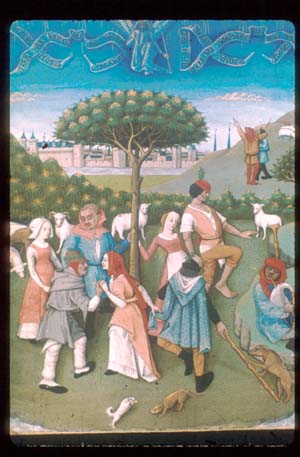
1400s La Danse Champétre
From the manuscript Heures de Charles O'Angouleme
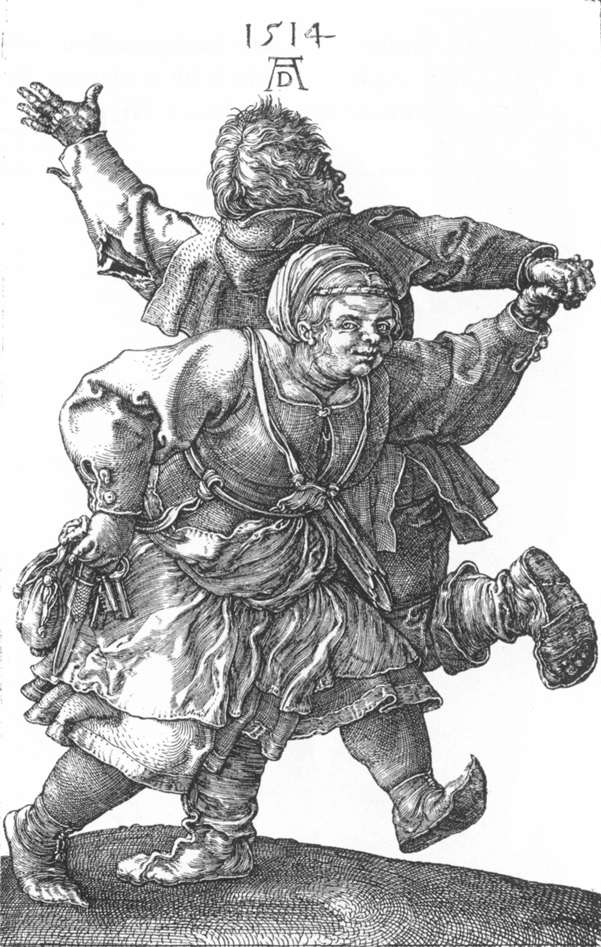
1514 Dancing Peasantsby Albrecht Dürer
1566 The Wedding Dance by Pieter Brueghel the Elder
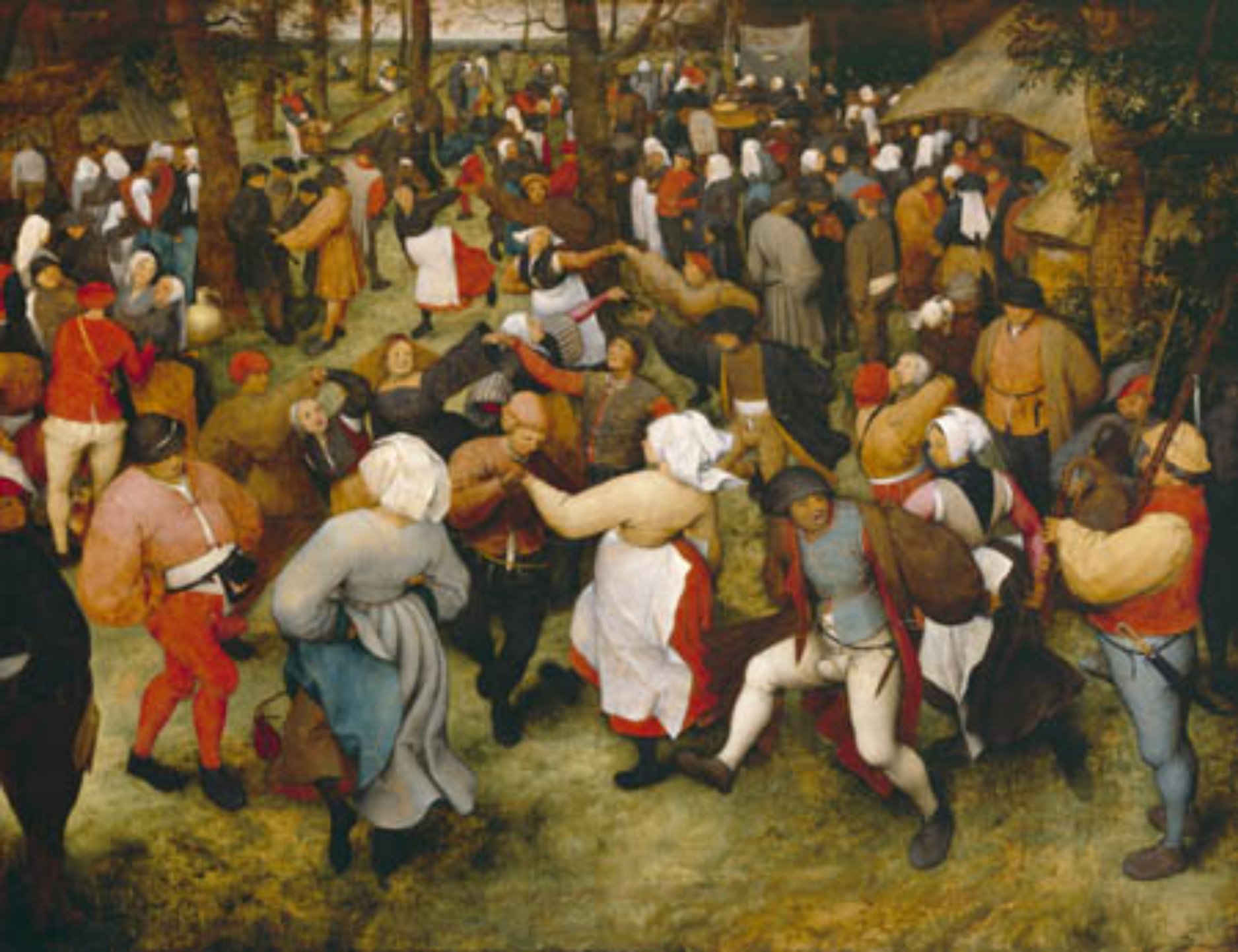
Source: Detroit Institute of Arts
1588 Orchésograhie
"Dancing is an art adapted by the youthful, agreeable to the aged and very suitable for all"